Choosing between a first home in the South Suburbs or the City of Chicago can feel like a tug-of-war. You want the most space your budget can buy, but you also care about commute, monthly costs, and lifestyle. This guide breaks down the key tradeoffs with fresh market context, clear examples, and a simple framework so you can move forward with confidence. Let’s dive in.
South Suburbs vs. City: What You Get
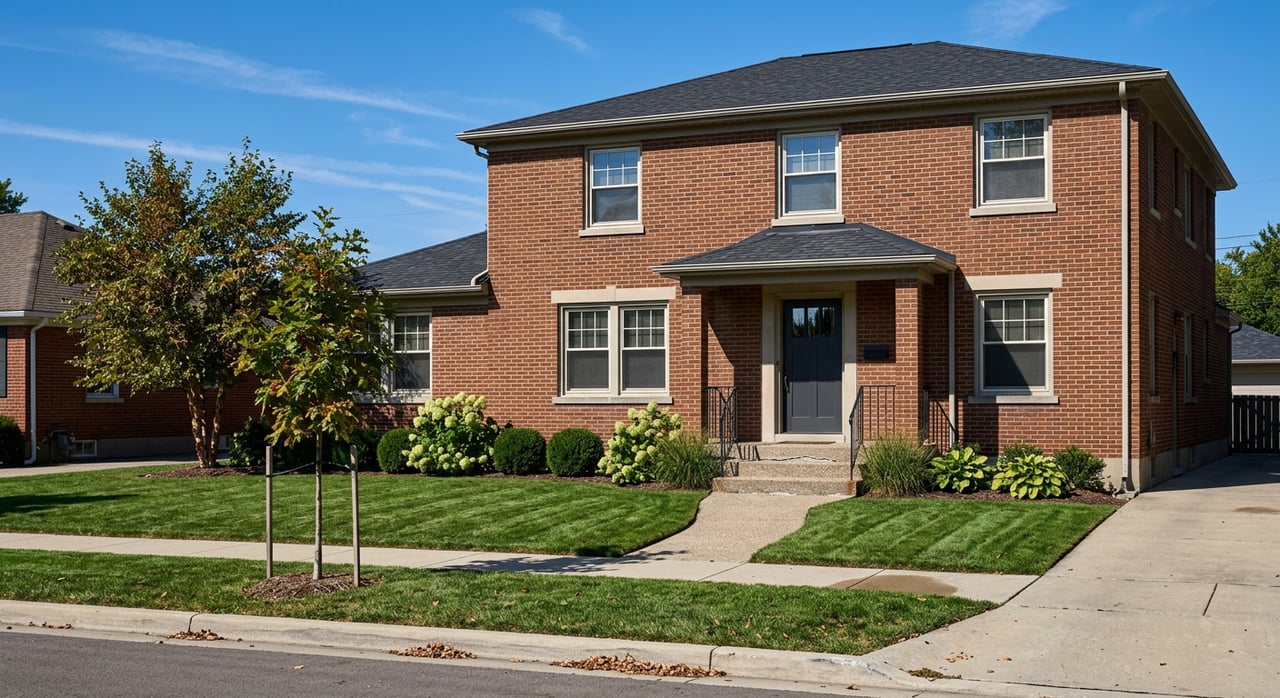
If you are weighing where your starter budget stretches further, remember that housing types differ a lot by area. Research from DePaul’s Institute for Housing Studies shows single-family homes make up about 63% of units in suburban Cook County compared with roughly 25.6% in the City of Chicago. That means you will generally see more yards and larger detached homes in the suburbs at similar total prices. You will likely see more condos and townhomes at the same budget inside the city. See the housing composition snapshot.
Price medians and price per square foot help you compare space. Recent market snapshots suggest:
- City of Chicago: median sale price about $355,000, with a citywide price per square foot near $250. As a rough guide, that points to around 1,400 square feet at the median price, though actual homes vary widely by neighborhood and property type.
- Oak Lawn: median around $260,000 and price per square foot near $180, which also pencils to roughly 1,440 square feet at that price.
- Tinley Park: median sale near $326,000.
- Orland Park: median listing around $399,000 and about $198 per square foot, which estimates to roughly 2,015 square feet at that price.
These are market-level illustrations from early 2026. Your actual options will depend on neighborhood, property condition, and whether you are shopping condos, townhomes, or single-family homes.
Space and Price Examples
Use price per square foot as a directional tool, not a rule. A downtown one-bedroom condo might have a high price per square foot and smaller total space, while a farther-out single-family may offer more rooms and a yard at a lower price per square foot. The goal is to translate your budget into liveable square footage based on the submarkets you like most.
If your max budget is near $350,000, the city median suggests you will likely compare condos and smaller houses in many neighborhoods. In several South Suburbs, that same budget can open more single-family choices with larger finished space. Always cross-check current medians for your exact target areas before you set expectations.
Commute and Daily Routine
Average commute times are not as different as many buyers expect. Recent Census QuickFacts estimates show mean travel time to work around 33.1 minutes for Chicago, about 33.7 minutes for Tinley Park, and roughly 33.8 minutes for Orland Park. This highlights that averages can look similar, but your real experience depends on your route, the train you use, and peak-hour traffic. You can review the Census QuickFacts for Chicago to understand the city baseline.
If you work downtown or near transit hubs, the South Suburbs offer solid commuter-rail options. The Metra Rock Island District, Metra Electric, and SouthWest Service serve many south-suburban towns, including Tinley Park, Orland Park, Homewood, Flossmoor, Matteson, and Richton Park/University Park. Check Metra’s station and schedule pages for trip times from your closest station.
Rail access inside the city is also evolving. The Chicago Transit Authority’s Red Line extension from 95th to 130th is moving forward, with construction activity announced in 2025 and completion targeted in the later 2020s. While this primarily affects far South Side neighborhoods, it could shift future commuting and park-and-ride patterns on the city’s southern edge. You can read the latest on the CTA Red Line Extension.
Parking is another quality-of-life and budget factor. Many suburban homeowners park at home without extra monthly fees. In the city, garage passes can add to your monthly costs. Market listings on SpotHero often show average monthly parking offerings in the low $200s, though prices vary widely by area and garage. You can browse monthly parking listings in Chicago to sense this cost line.
Monthly Cost Beyond Price
Your monthly housing cost includes more than principal and interest. It also includes property taxes, homeowner’s insurance, private mortgage insurance if you put less than 20% down, and any HOA or condo dues.
- Mortgage rate context: Freddie Mac’s survey put the 30-year fixed average near 6.09% for the week of Feb 12, 2026. Use live rates when you run your numbers. See the latest Freddie Mac mortgage rate snapshot.
- Payment examples at 6.09% and 5% down: on a $300,000 purchase, your loan is about $285,000 and principal plus interest is roughly $1,728 per month. On a $400,000 purchase, about $380,000 financed, P&I is roughly $2,303 per month.
- Property taxes: effective residential tax rates vary by community and school districts. A countywide example near 1.88% would mean about $6,580 per year on a $350,000 home, or about $548 per month. Actual bills differ based on municipality, assessments, and appeals. Explore the Cook County property tax analysis for context.
Also include estimated homeowner’s insurance, PMI if your down payment is under 20%, and HOA dues if you are buying a condo. In the city, consider monthly garage parking if needed. In the suburbs, budget for yard care and maintenance on larger lots.
Down Payment Help
If saving for down payment and closing costs is your hurdle, programs can help.
- IHDA programs: The Illinois Housing Development Authority offers mortgage products that can pair with down payment assistance. Depending on the product and where you buy, assistance can be up to $10,000. You must work with IHDA-approved lenders and meet program rules. Learn more on the IHDA homeownership page.
- Cook County pilot: The Cook County Down Payment Assistance Pilot has provided subsidies up to 5% of the sale price, capped at $25,000, when funds are available. Funding windows open and close quickly, so you must confirm availability at the time you apply. Review the Cook County program page for current status.
These resources change often. Check them early in your search so you can move fast when a home fits.
Two Real-Life Scenarios
Here are two simplified paths many first-time buyers compare. Use them to clarify what matters most to you.
Scenario A: Buy in-city condo near transit
- You get easier access to restaurants, events, and transit. Daily errands can be more walkable.
- Expect higher price per square foot and smaller finished space at a given budget. HOA dues cover building maintenance and amenities.
- Parking can be an added monthly cost. If you rely on public transit for commuting, you may not need a car.
Scenario B: Buy in the South Suburbs
- You often get more living area and a yard at the same budget. Many options are single-family homes.
- Parking is usually easy and free at home. You will likely rely on a car for daily errands.
- Commuter rail via Metra can make downtown access reasonable. Property taxes and school districts vary by town, so compare carefully.
Your Decision Checklist
Use this quick list to compare a few target neighborhoods on even footing:
- Confirm current median price and price per square foot for the exact neighborhood. Use recent market snapshots and verify the data window.
- Map your door-to-door commute during peak hours. Check drive times plus Metra schedules and station maps for rail options.
- Estimate your full monthly housing cost. Start with a current rate from Freddie Mac and add property taxes, insurance, PMI, HOA, and parking.
- Pull a tax estimate for the property and school districts you are considering. Review county context with this Cook County tax analysis and confirm specifics with the local assessor or tax portal.
- If schools matter to you, review district and school-level data from neutral sources, such as official state report cards.
- Check down payment assistance options early. Start with IHDA’s homeownership programs and confirm any Cook County pilot funding windows.
Work With a Local Guide
A first home is about fit. The South Suburbs can deliver more space and a yard for the money, while the city trades space for walkability and access. Both paths can work if your monthly budget, commute, and lifestyle are aligned.
If you want help running numbers, comparing neighborhoods, and lining up lenders and programs, reach out to a local pro who knows both sides of this decision. For hands-on guidance and current listings across Chicago and the South Suburbs, connect with Brittney Wilkinson.
FAQs
What are the main cost differences between Chicago and the South Suburbs for first-time buyers?
- City condos often have higher price per square foot and HOA dues, while many South Suburb homes offer more space at similar prices with lower parking costs but higher maintenance on yards.
How do average commute times compare between Chicago and towns like Tinley Park or Orland Park?
- Recent Census data shows city and select South Suburb commutes both averaging around 33 minutes, but your exact time depends on route, peak traffic, and access to Metra or CTA.
How do I estimate my monthly payment for a starter home?
- Use a current 30-year fixed rate, add principal and interest, then include property taxes, homeowner’s insurance, PMI if under 20% down, plus HOA or parking where relevant.
What down payment assistance is available in Cook County for first-time buyers?
- IHDA programs can offer assistance up to $10,000 with approved lenders, and Cook County has a pilot that may provide up to 5% of the price capped at $25,000 when funds are available.
How much space can I expect for about $350,000 in each area?
- City medians suggest roughly 1,400 square feet at that price, while select South Suburbs may offer similar or more space, especially in single-family homes, depending on the town and condition.